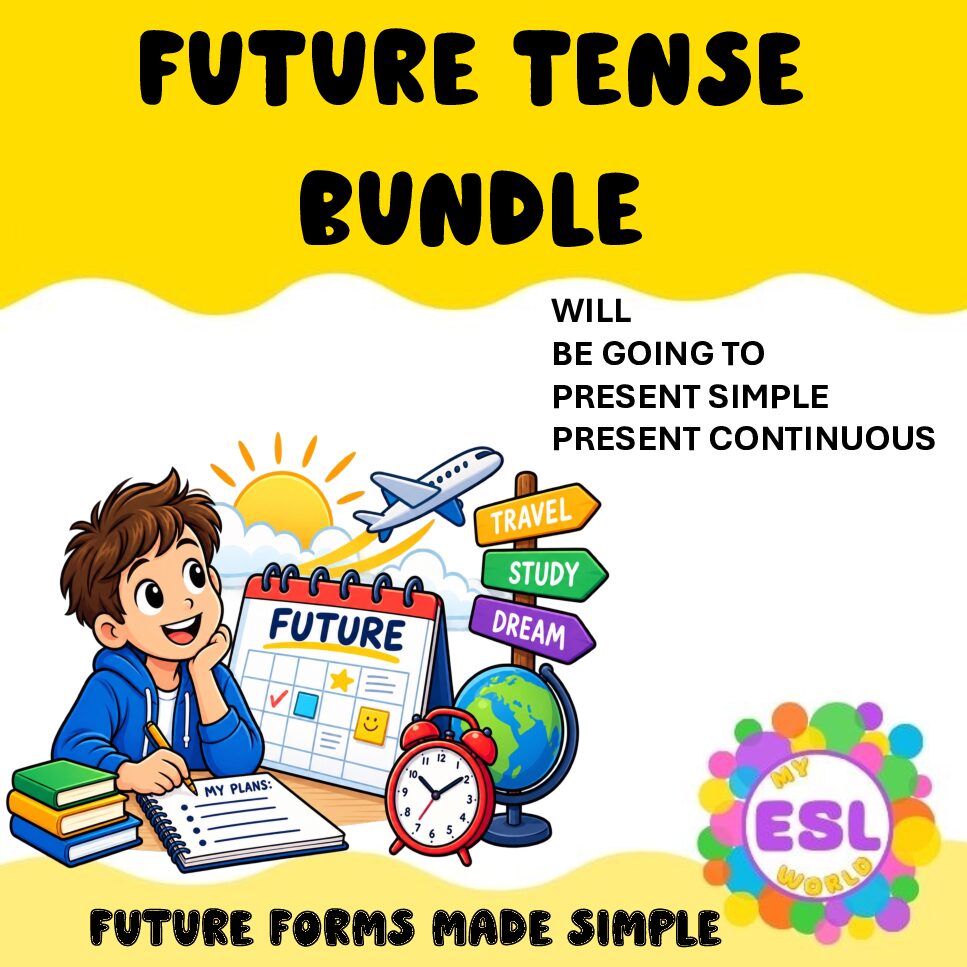
Take the confusion out of teaching future tenses!
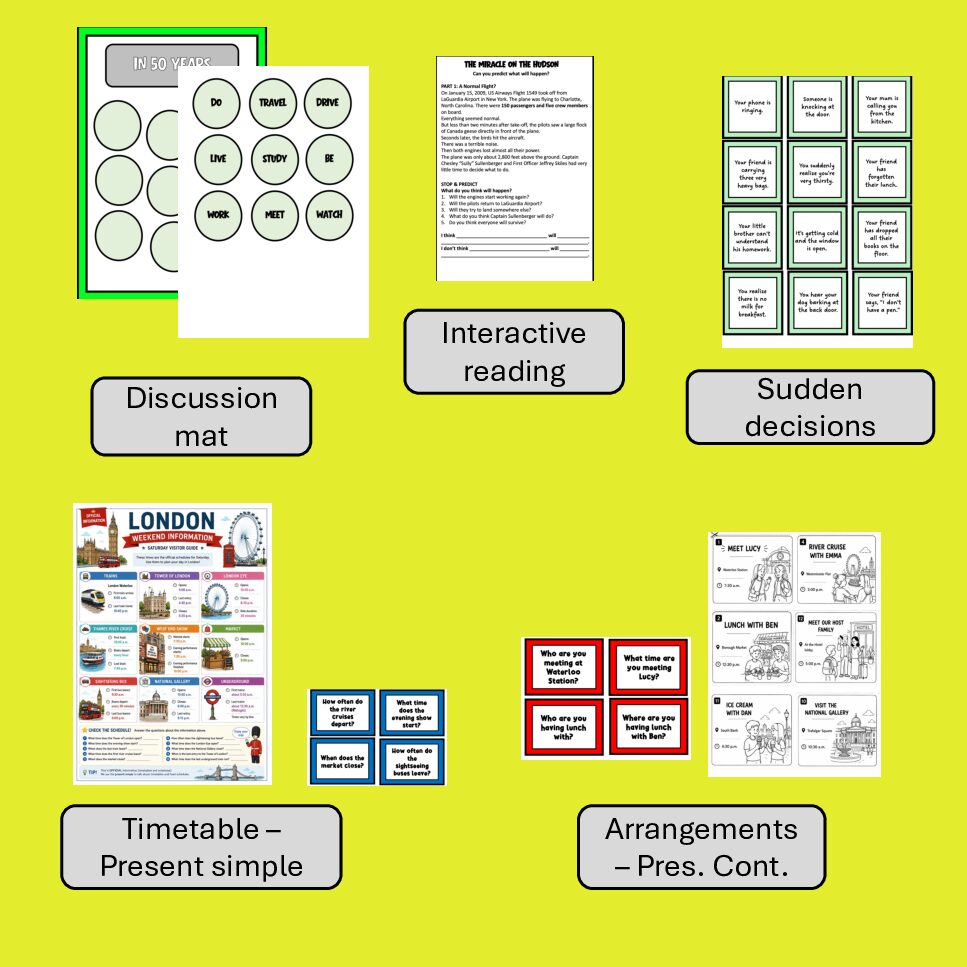
This 4-lesson Future Tenses Bundle helps students understand not only how to form the future, but most importantly which future form to use and why.
Instead of teaching will, going to, Present Simple and Present Continuous as disconnected grammar rules, students compare them through real situations, speaking activities, games, puzzles, reading tasks and visual prompts.
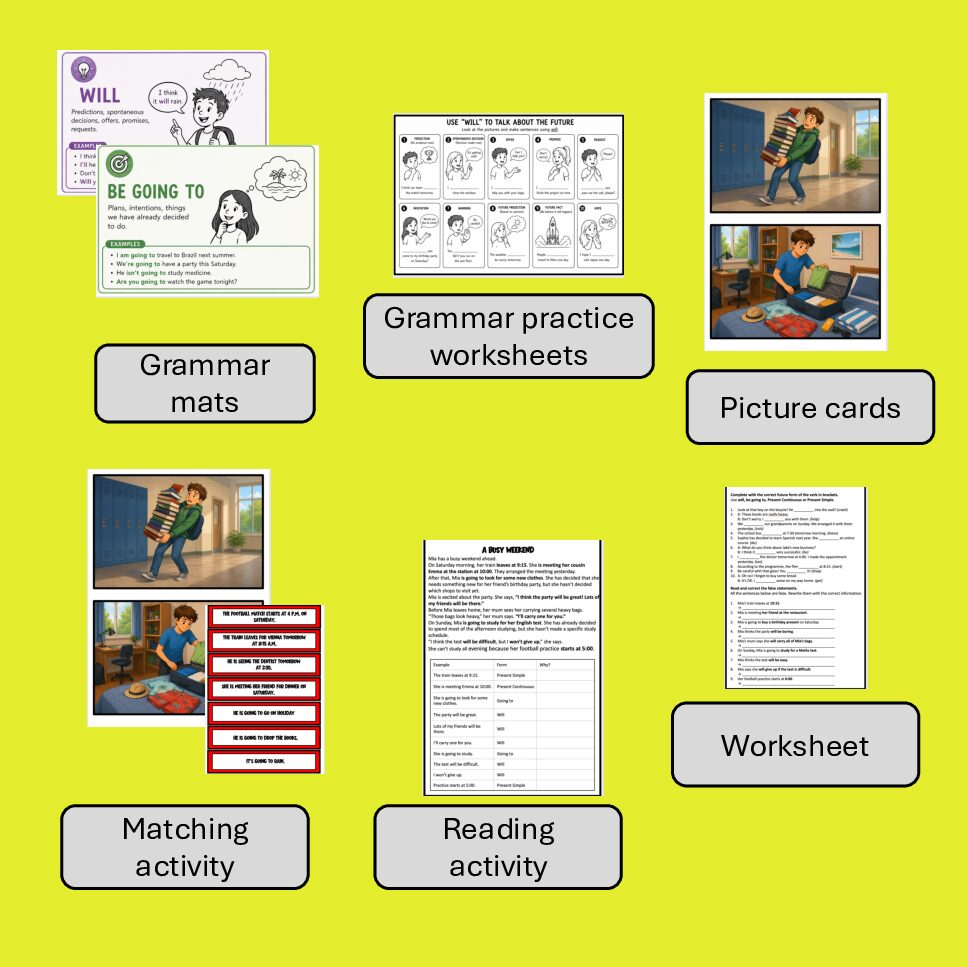
The bundle includes:
Lesson 1: Future Forms Together
Students are introduced to all four future forms and learn to recognize the difference between them:
• will for predictions and spontaneous decisions
• going to for plans, intentions and evidence-based predictions
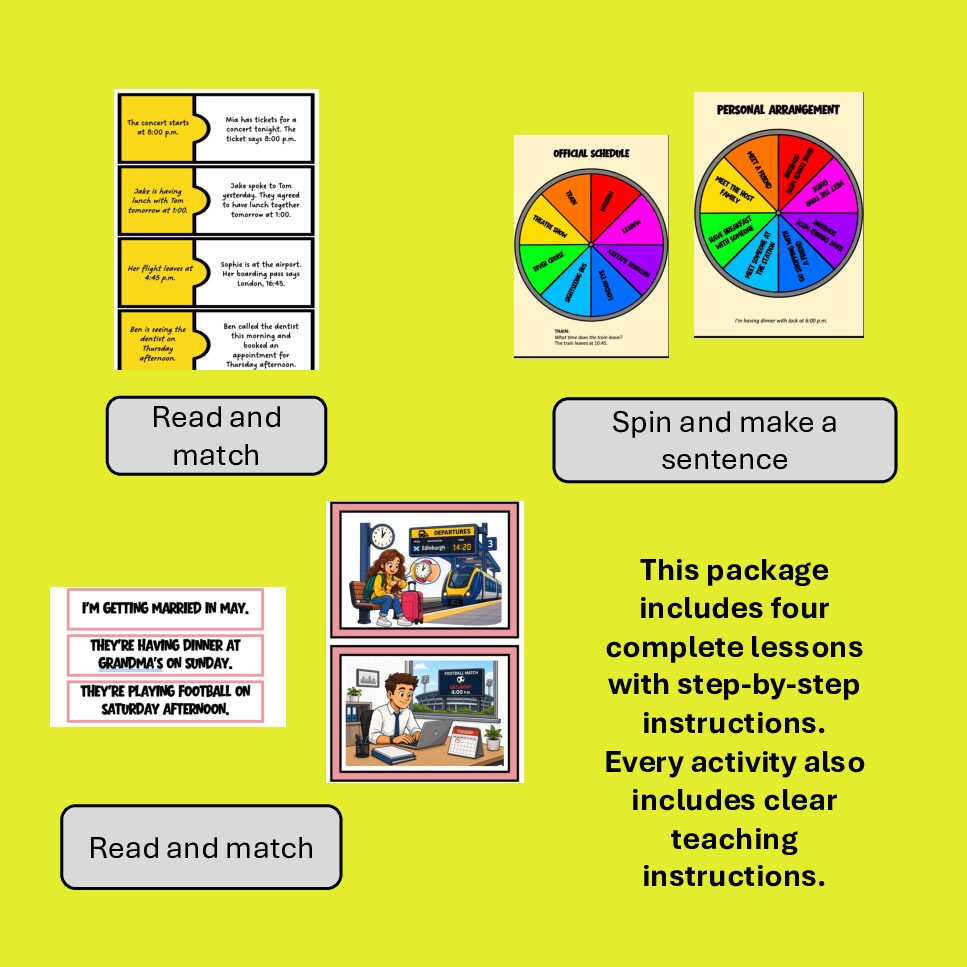
• Present Simple for timetables, schedules and fixed events
• Present Continuous for personal arrangements
Students then practise choosing the correct form and, importantly, explaining why it is used.
Lesson 2: Going to
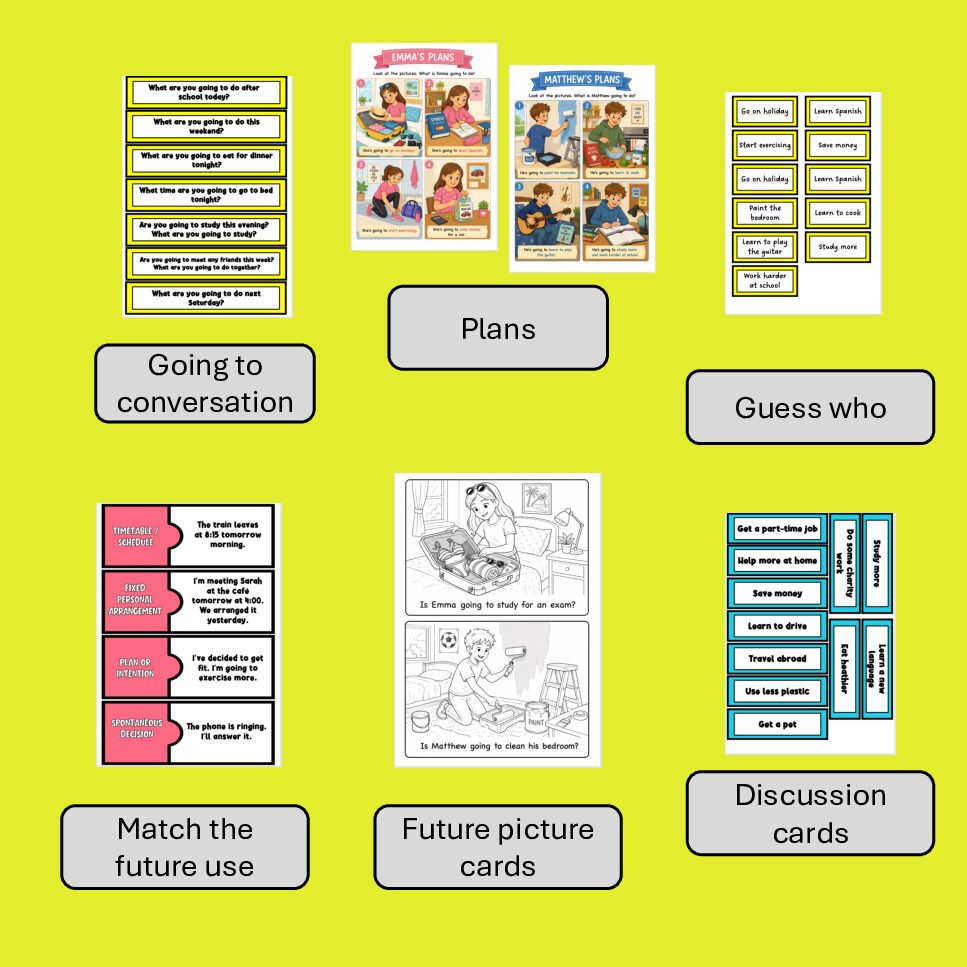
A complete lesson focused on future plans and intentions. Students practise affirmative, negative and question forms through picture prompts, personal plan cards, situation cards, speaking tasks and games.
Lesson 3: Will
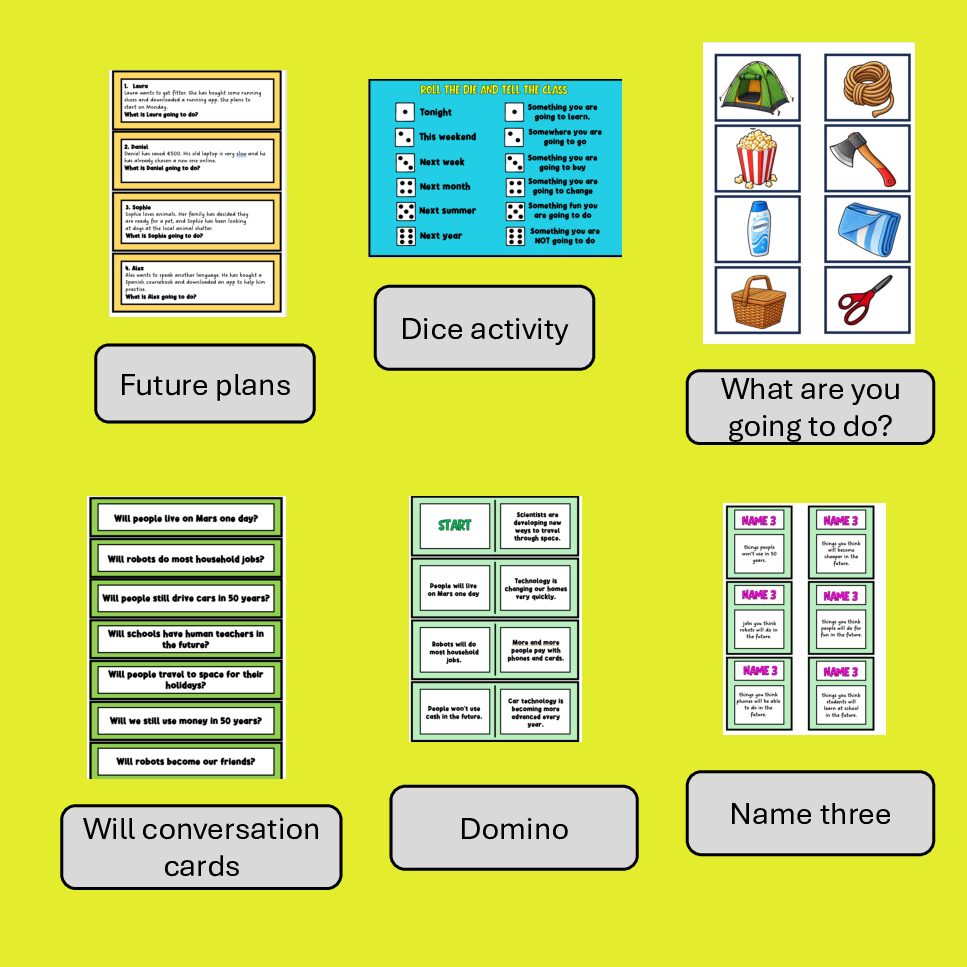
Students explore will for predictions and spontaneous decisions through future discussions, prediction games, dominoes, speaking challenges and a reading-and-predict activity based on a real event.
Lesson 4: Present Simple vs Present Continuous for the Future
Students learn the difference between official schedules and timetables and personal arrangements. They practise both forms through schedules, appointment cards, speaking wheels, matching activities, puzzles and contextual situations.
This is not a grammar package built around filling in endless sentences. Students repeatedly read, think, choose, speak, justify and use the future forms in context, helping them understand the logic behind each tense.
By the end of the four lessons, students have a much clearer system for deciding:
Is it a prediction? A spontaneous decision? A plan? A fixed timetable? Or a personal arrangement?
Perfect for teachers who want to finally make future forms clear, practical and memorable for their students.
Ideal for: upper primary, lower secondary and teenage ESL/EFL learners.