Take your students beyond basic museum vocabulary with this 3-lesson communicative ESL unit designed to get them learning, thinking and talking.
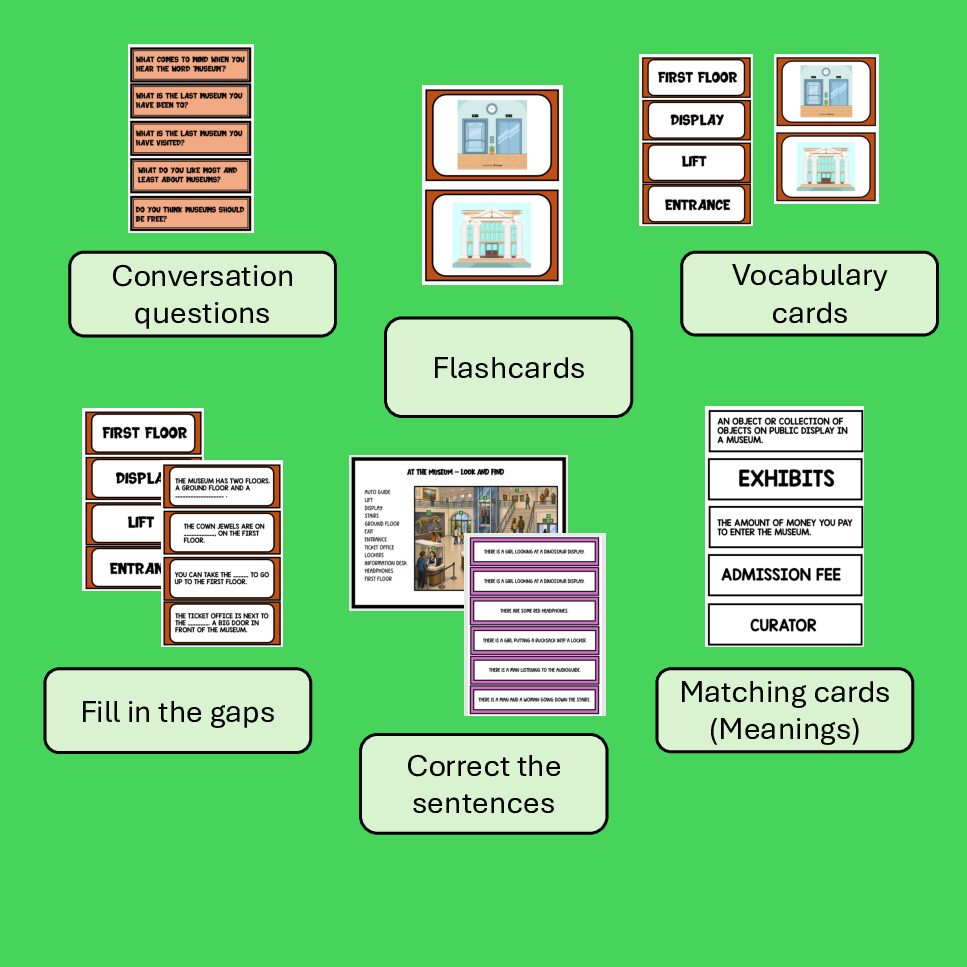
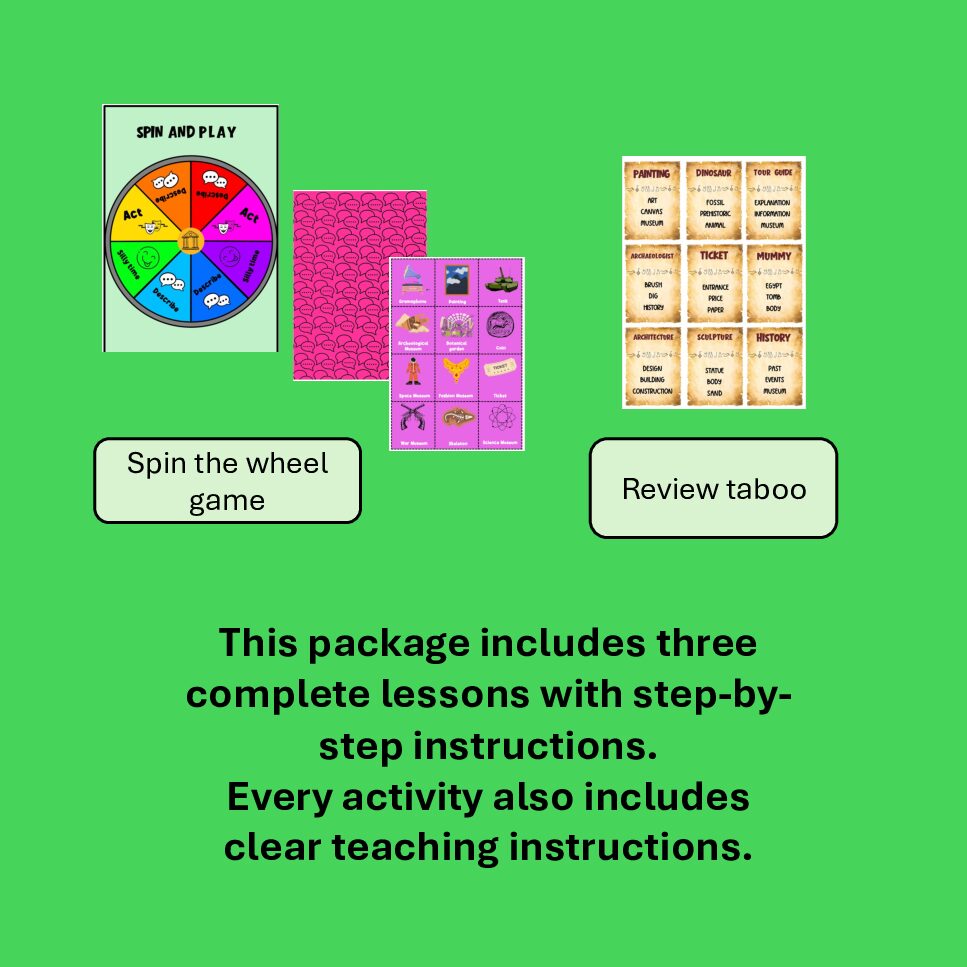
All About Museums introduces useful vocabulary students actually need to understand and talk about museums, including words connected to museum spaces, exhibits and visits. Students build this vocabulary through flashcards, picture matching, fill-in-the-gap activities, Bingo, Taboo and visual tasks, rather than simply memorising word lists.
As the lessons progress, students move from vocabulary into real communication. They answer conversation questions, play speaking games, describe and guess words, complete challenges and express their own opinions about museums. The discussion goes well beyond simple questions such as “Do you like museums?” Students consider interactive exhibits, technology in museums, virtual tours, the importance of museums, museums for teenagers and even whether cultural artefacts should be returned to their countries of origin.
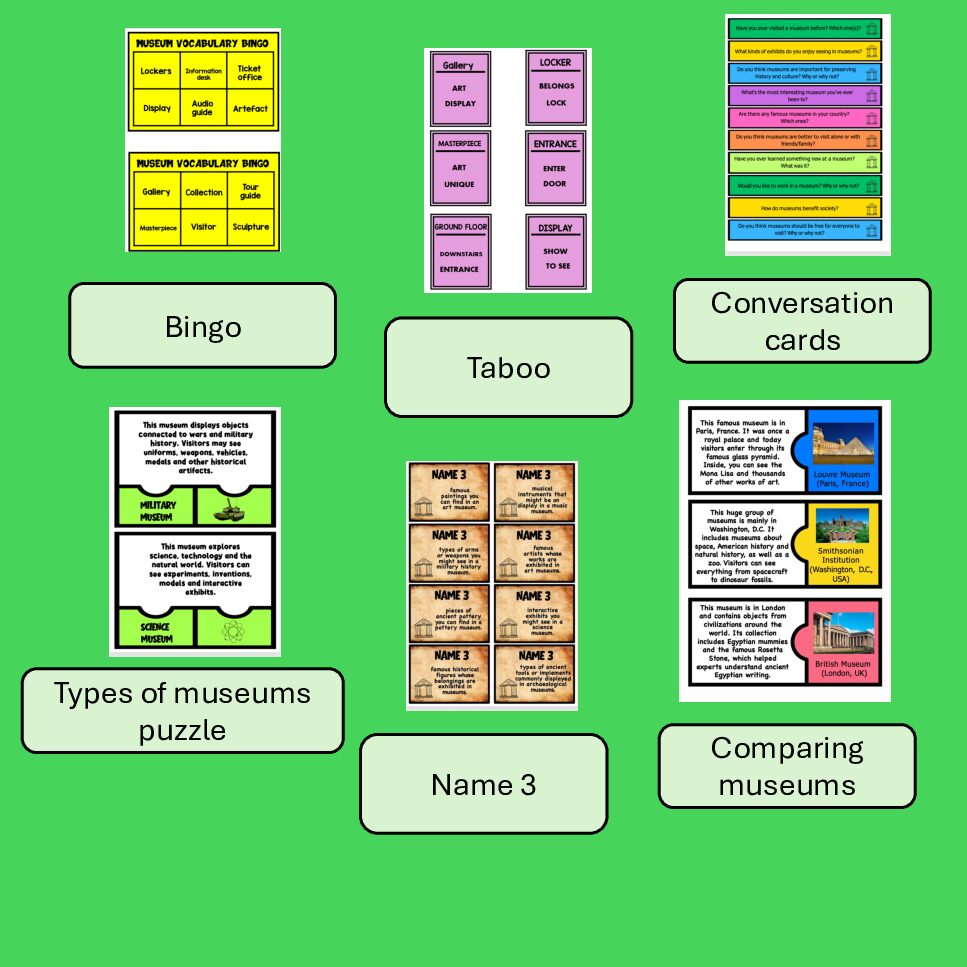
Students also explore and compare many different types of museums, including art, history, military, science, natural history, archaeological, sports, music, automobile, fashion and other specialised museums. They learn what can be found in each one and use this information in matching, memory, speaking and classification activities.
The unit also brings the topic into the real world. Students discover famous museums such as the Louvre, the British Museum, the Smithsonian Institution, the Vatican Museums, the Metropolitan Museum of Art and the Acropolis Museum.
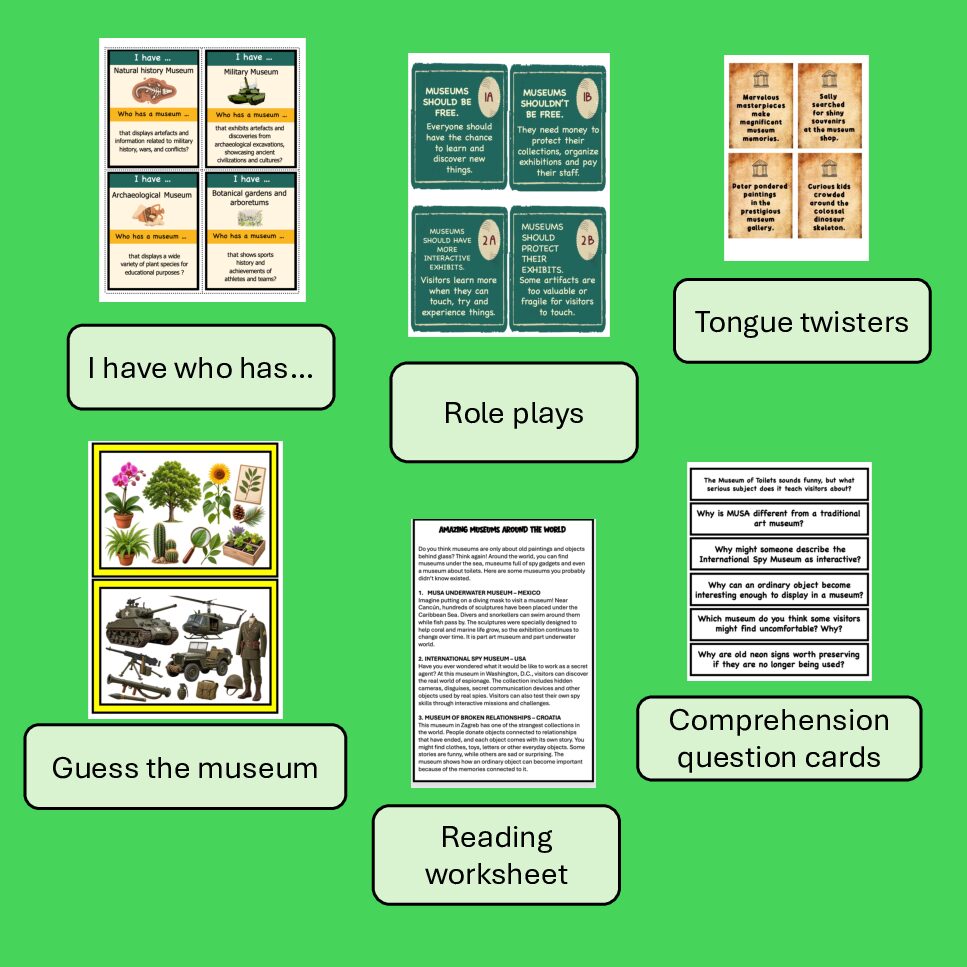
A reading activity introduces some of the most unusual museums around the world, from an underwater museum in Mexico and the International Spy Museum to the Museum of Broken Relationships, the Mütter Museum, the Neon Museum and even a museum dedicated to the history of toilets. This gives students plenty of interesting material for comprehension, reactions and further discussion.
There is a strong focus on speaking throughout the entire unit. Students rank museums they would like to visit, compare their choices with a partner, explain disagreements and justify their opinions. They even finish by imagining a new unusual museum for their own city and explaining what visitors would see, what would make it different and why teenagers would want to visit it.
The package includes activities such as flashcards, vocabulary matching, fill-in-the-gaps, Bingo, Taboo, picture-based activities, conversation cards, Name 3, museum puzzles, memory/matching games, I Have… Who Has…?, role plays, Spin the Wheel, reading comprehension and extended speaking tasks.
Suitable for upper primary, teenagers and adult ESL/EFL learners, with activities that can easily be adapted to the age and speaking level of the class.